 Explore the work
 Discuss research
A strong classifier is not automatically a trustworthy one.
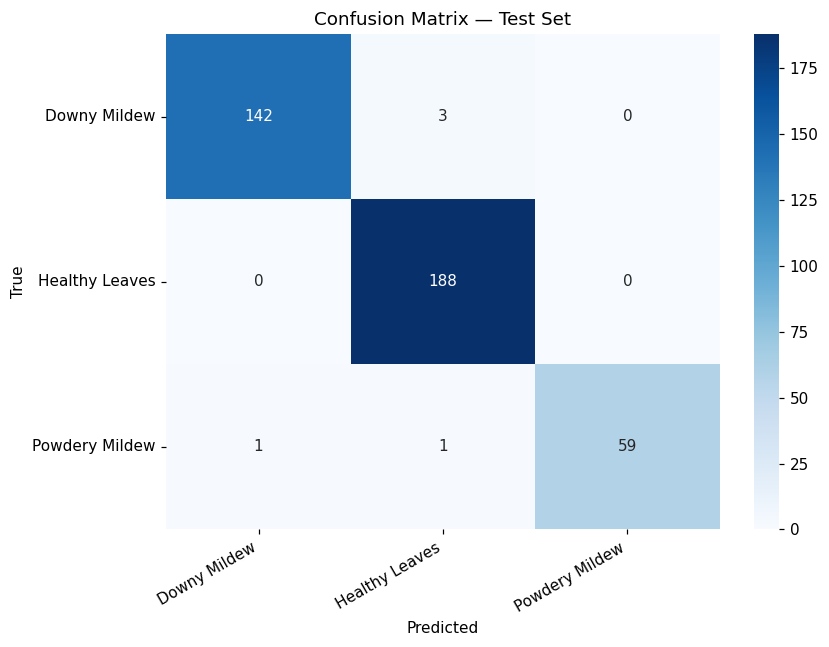
The first TrustinXAI application classifies healthy grape leaves, Downy Mildew, and Powdery Mildew from field-captured images. A fourth disease is deliberately held out to test whether the model can recognise when it does not know.
The question
Can a useful plant-disease model remain calibrated, show where it is looking, and flag unfamiliar symptoms instead of making a confident wrong prediction?
The approach
EfficientNet-B0 provides the baseline. Temperature scaling, Grad-CAM, and Mahalanobis distance add calibration, visual explanation, and out-of-distribution detection.
What I learned
The baseline reached high test accuracy, yet softmax still gave unseen disease images a mean confidence of 88.93%. Accuracy was the beginning of the trust problem, not the end.
Now
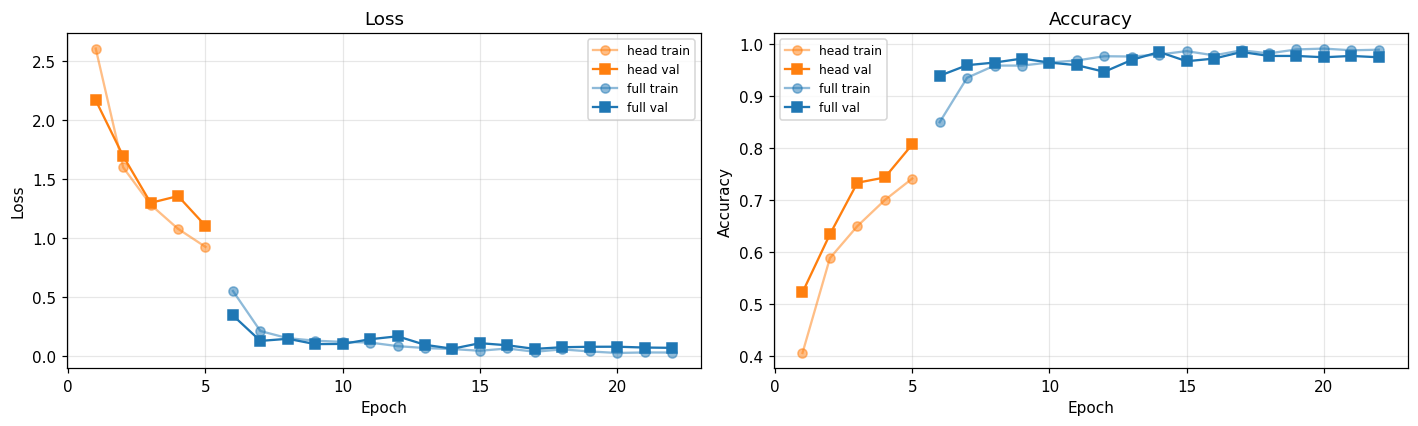
Phase 1 training is complete. The current work evaluates calibration, explanation quality, and whether the OOD detector separates unfamiliar disease from known classes.
 Start a conversation